Best Time to Visit Norway for Northern Lights
By The Kensington Content Team
Reviewed by Eoin Boyne
Published November 17, 2026 | Reading Time: 6 mins
Step outside after dinner with your gloves already on, and the cold still finds the one inch of skin you forgot. Snow squeaks under your boots. The sky is black and crowded with stars, and nothing is happening yet.
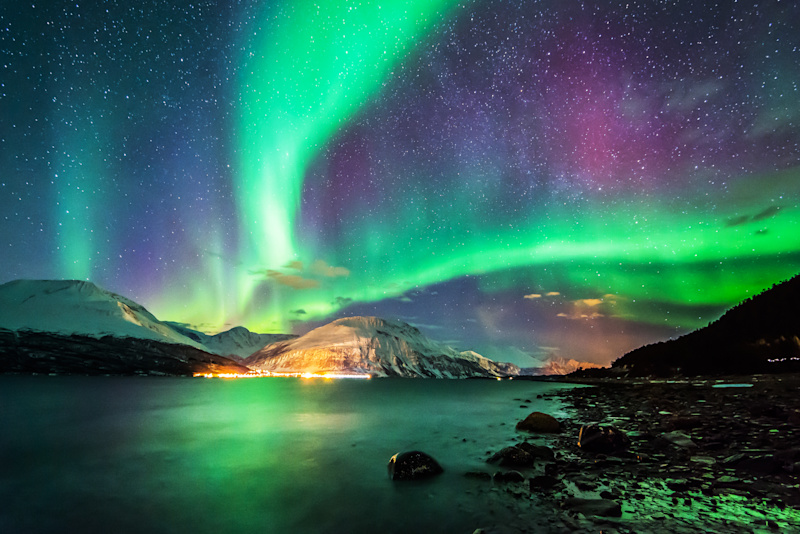
Then a pale green band leans across the horizon. That uncertainty and anticipation are part of the northern lights, and it is why the best time to visit Norway for northern lights depends on more than a single month. Darkness, clouds, and the sun each get a vote, and the months that satisfy all three aren't always what you would guess.
Discover the northern lights with our private‑guided Norway tours, thoughtfully designed around the best viewing locations, seasonal conditions, and experiences that matter most to you.
The best time to visit Norway for northern lights generally runs from September to early April, although sightings can begin in late August in Tromsø when the skies become dark enough. October through March offers long viewing windows, but no single month guarantees better conditions. Within that window, October, February, and March give you the best balance of dark skies and daylight you can actually use. The differences between these months come down to darkness, weather conditions, and available daylight.
The northern lights occur above the Arctic all year, but you can only see them against a sufficiently dark sky. Northern Norway, particularly areas north of the Arctic Circle, is one of the best regions for viewing them.
Summer brings the Midnight Sun, when the sun never sets. In Tromsø, this lasts from around mid-May to the end of July, keeping the sky too bright for aurora viewing. Darkness gradually returns in August, making sightings possible by late August. However, September marks the start of more consistently favorable viewing conditions as nights grow longer. The season generally continues through March and into early April, when increasing daylight gradually reduces viewing opportunities.
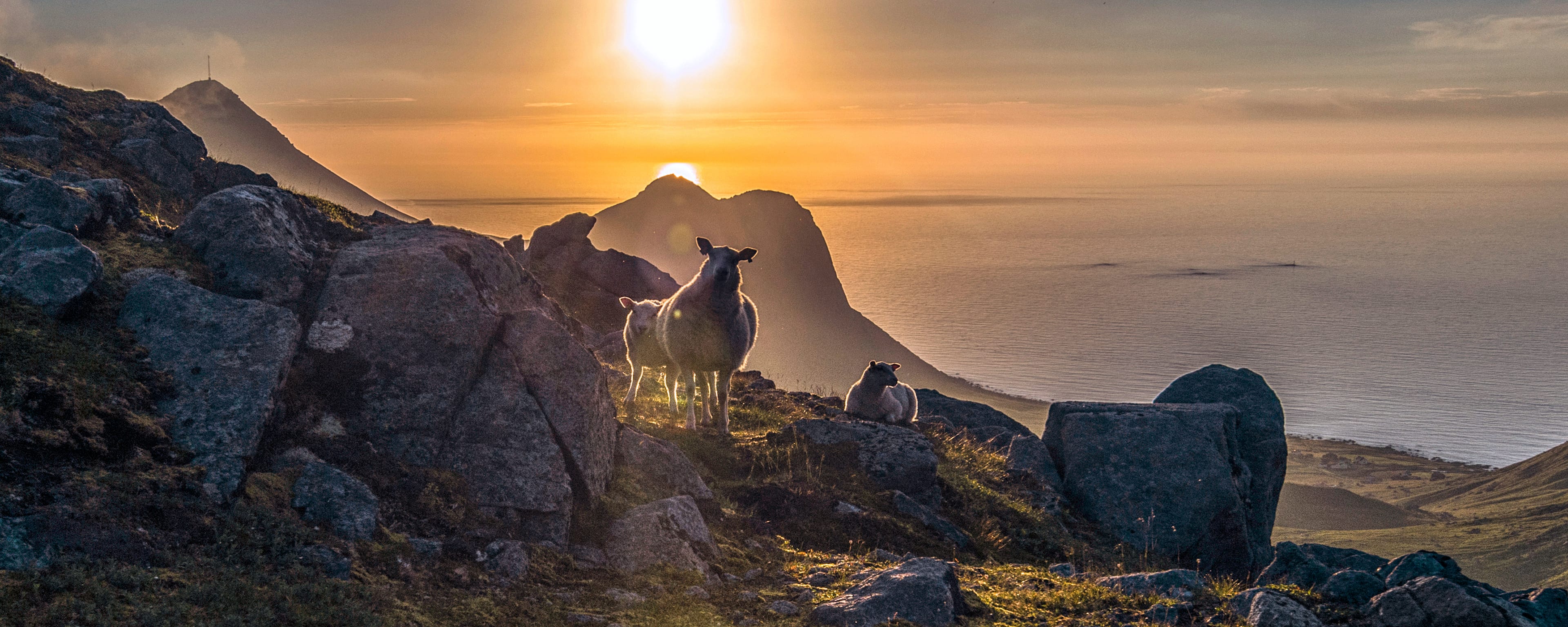
October brings dark nights and enough daylight for a full program of excursions. The sun still rises each morning, giving travelers time to explore Northern Norway before heading out to watch the aurora after dark.
The northern lights occur when charged particles from the sun interact with gases in Earth's upper atmosphere. Geomagnetic activity tends to increase around the September and March equinoxes, making early autumn an appealing time for aurora viewing. However, cloud cover remains unpredictable, particularly along Norway's coast, so clear skies are never guaranteed.
As the nights keep lengthening, midwinter seems like the obvious choice, and for the lights alone it is a good one. The trade‑off is daylight. In winter, the sun stays below the horizon for weeks, a period called the polar night. In Tromsø it runs from about late November to mid‑January, and you get only a few hours of twilight each day, when the sky shifts between soft pink, purple, and deep blue.
You can still enjoy daytime excursions during the polar night, including dog sledding, wildlife experiences, and cultural visits. Some activities operate during twilight or darkness, although scenic excursions benefit from the limited midday light. The further north you go, the longer polar night lasts. In Svalbard, far to the north, it runs from November to late January.
By February, the balance tips back toward light. In Tromsø, the sun is back after the polar night, so your days grow longer while the nights stay dark.
"If I had to recommend a month for a first‑time Northern Lights trip to Norway, I would definitely choose March,” says Kensington Destination Expert Eoin Boyne. “It offers longer daylight hours during the day while still providing plenty of dark nights for viewing the lights."
March brings the spring equinox, a period associated with increased geomagnetic activity and more frequent auroral displays. February and March also offer longer daylight hours for excursions while retaining sufficiently dark nights for northern lights viewing. Actual visibility still depends on cloud cover and solar activity. For many travelers, that makes them the best time to see the Northern Lights in Norway.
Whichever month you choose, the hour matters as well. The best time to see the northern lights in Norway on a given night tends to be around midnight, though displays can begin in the evening and run into the small hours. A moonless night helps too.
None of this adds up to a promise, since cloud cover, darkness, and solar activity all have to line up on the same night. That is why the place you choose to wait matters as much as the month.
Six places in Northern Norway reward the wait, and each northern lights Norway location suits a different kind of traveler.
Location | Best For |
Tromsø | First‑time visitors who want a wide choice of excursions |
Alta | Dry‑climate skies, dog sledding, and quiet |
Lofoten Islands | Fishing villages and coastal photography |
Kirkenes | Remote Arctic days and a snow hotel |
North Cape | Far‑north isolation and winter roads |
Svalbard | Polar night and daytime aurora |
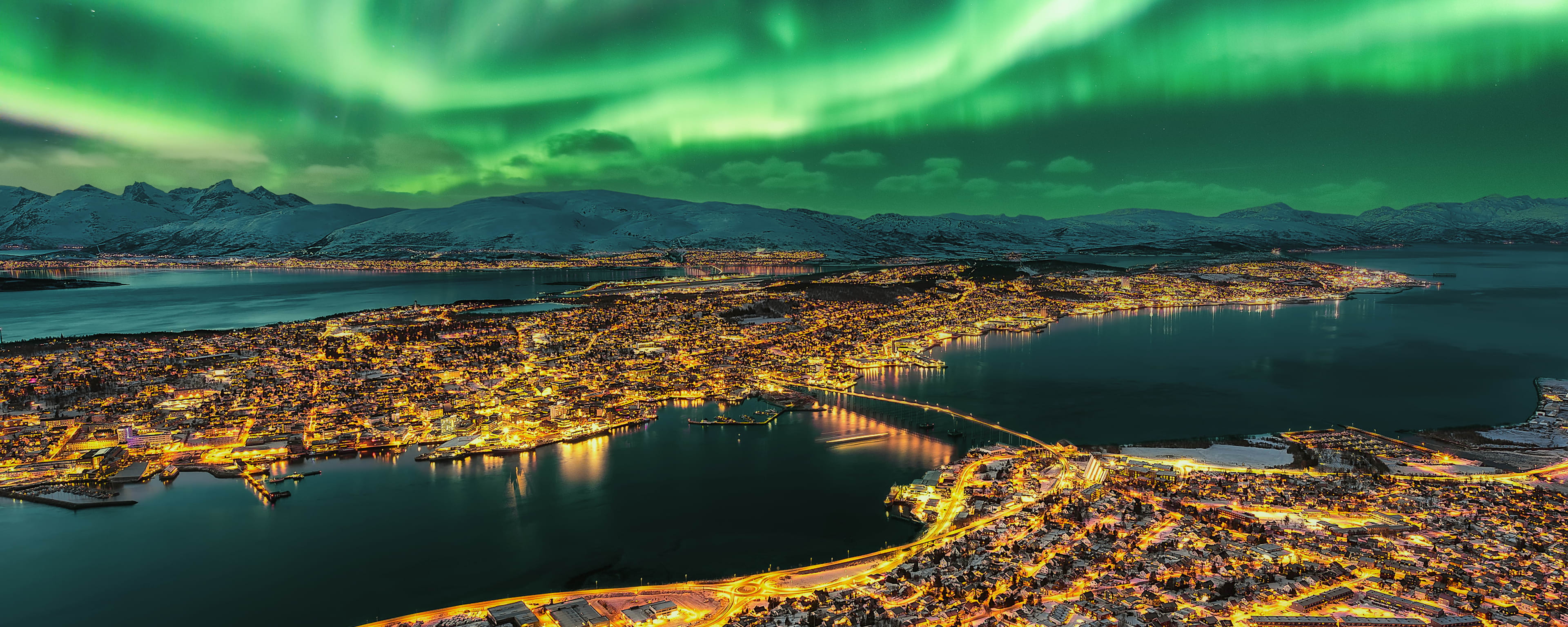
Most trips begin in Tromsø for a great balance of city life and proximity to nature. The city sits well inside the Arctic Circle, beneath the auroral oval, the ring around the North Pole where the lights appear most often. Festivals, concerts, and cafés fill the town, with fjords and mountains a short drive beyond.
Alta is where aurora science began. Alta Museum describes the observatory built here on Haldde mountain, in use from 1899, as the world’s first northern lights observatory. Researchers had been drawn to the area since a French expedition in 1838 and 1839, and the town still has a reputation for clear night skies. Guides drive you wherever the sky is open that night, so the weather picks your viewing spot.
Alta is also a calmer base than Tromsø, so the choice between them depends on who is traveling.
"For couples or clients looking for a quiet luxury experience, somewhere like Alta offers a much more peaceful and luxurious Arctic experience," says Destination Expert Eoin Boyne.
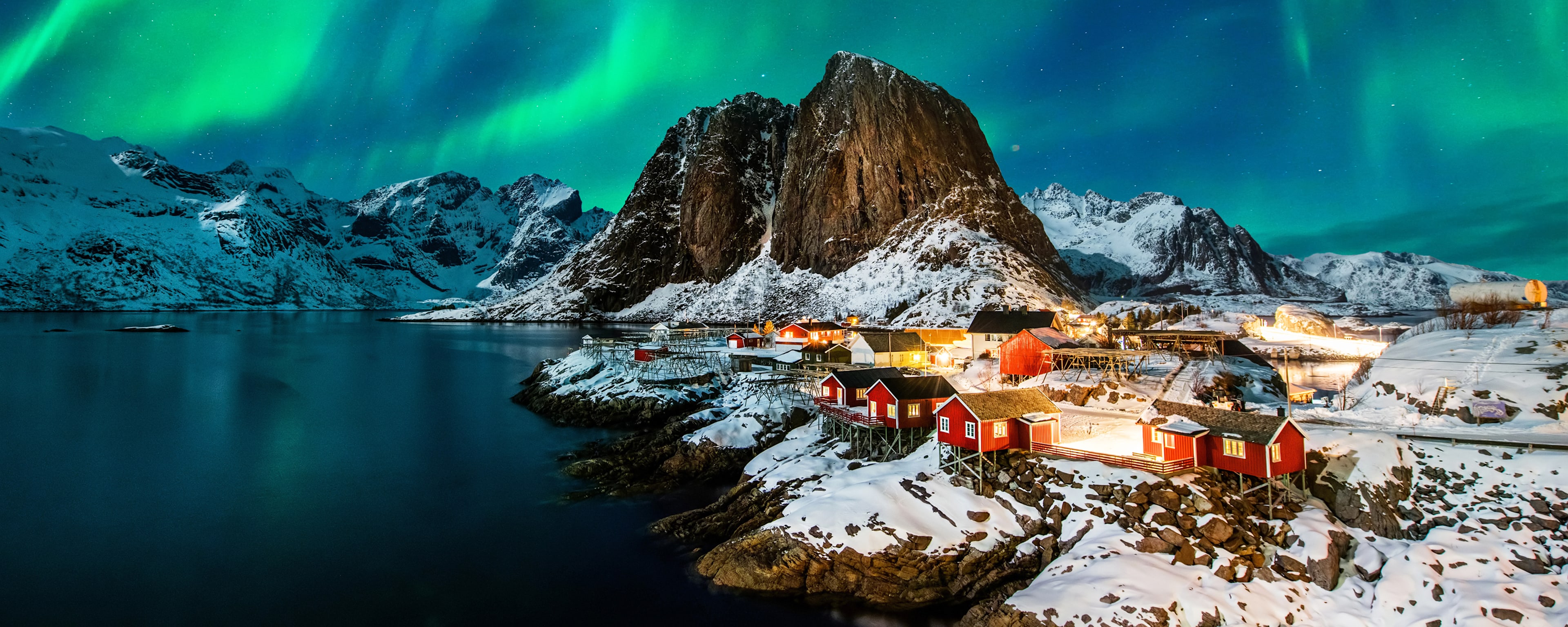
Lofoten suits travelers who want scenery as much as sky. The islands sit under the auroral oval, so the lights are a strong possibility. When they appear, they hang over rorbu, red fishermen’s cabins on stilts at the water’s edge, with mountains rising behind.
Kirkenes is a remote town in Finnmark, close to the Russian border and within reach of Finland. Its main draw is Snowhotel 365, a snow‑and‑ice hotel just outside town that stays open year‑round. The interior is maintained at approximately ‑4°C (25°F), with thermal sleeping bags provided for overnight guests. Snow insulates, so a night there is actually warmer than it sounds.
In winter, access to the North Cape may require joining a scheduled snowplow‑led convoy along the final stretch of the E69 from the Skarsvåg junction. Departures depend on weather and road conditions, and severe conditions can disrupt access. The exposed plateau is vulnerable to strong winds and rapidly changing visibility, making advance planning essential.
Svalbard is an Arctic island group far above the mainland, and during its polar night the sky stays dark enough for the aurora at any hour. Displays can even appear around midday, though they tend to be fainter than the ones at night.
Oslo and Bergen sit far to the south, well outside the auroral oval. They work well as places to arrive or to spend a cultural day, but they are too far south to rely on for the lights.
Once you have a base, the next question is time, and the honest answer is more than you might expect.
Plan at least three to four nights in Northern Norway, ideally five to seven if the northern lights are your main priority. A longer stay gives you more opportunities to find clear skies and suitable aurora conditions. Even during the best time to visit Norway for northern lights, avoid planning a single aurora night. One cloudy evening can hide an active aurora completely.
A cloudy stretch stings less when the days hold their own highlights. Travelers who base themselves in Alta have one of the best on offer.
“If they travel somewhere like Alta and stay at Sorrisniva, they can even spend a night in one of the snow rooms, which is a true once‑in‑a‑lifetime experience,” says Eoin. “It creates memories that last forever, ensuring their itinerary offers so much more than just the Northern Lights."
Plan daytime experiences around your travel dates, from seasonal whale watching and dog sledding to Sámi cultural visits. These activities give your trip more variety, although availability depends on the month, weather, and local operators.
The days between aurora nights are short, but they fill easily. Alta is known as Norway's capital for dog sledding. Drive inland to Karasjok, the center of Sámi culture in Norway, and a visit can mean coffee and conversation inside a lavvu, the traditional Sámi tent.
Along the coast, the whales arrive with the herring. From November to late January, orcas and humpbacks follow the herring into the fjords around Skjervøy, a four-hour drive from Tromsø. That season overlaps the polar night, so the boats go out in blue and pink twilight.
Food keeps its own calendar. In Lofoten, spawning cod called skrei arrive in February and March, and most are hung on wooden racks to dry in the salt wind. Which month you travel decides what ends up on the table, so the best time to visit Norway for northern lights shapes your menu as well.
Once you have settled on the best time to visit Norway for the Northern Lights, the next choice is how you spend the hours around the aurora.
Some travelers spend them on the water, where a private vessel from Tromsø can head for the Lyngen Alps; ski by day and watch the sky from the deck at night. Others prefer to stay put in a warm remote lodge, with the sky overhead and the lights coming to you. And some want to chase the sky, with a private guide who leaves when the forecast clears, not when a group departure says so.
Most strong itineraries blend all three styles, and that blending is the work of a Kensington Destination Expert. They can help you decide whether Oslo and Bergen open the trip, how to connect destinations through scenic train journeys, domestic flights, or private transfers, and which northern base suits your month. They can also help shape what fills the days between aurora nights.
"When designing a luxury private‑guided Northern Lights itinerary, we offer some incredible experiences that clients simply would not get on a standard group tour. We can organize a private sea eagle safari or private king crab fishing on the frozen sea. We can also arrange a wellness retreat near Bodø at Manshausen Island Resort," says Destination Expert Eoin Boyne.
Kensington can arrange for the vessel, lodge, guide, and driver before you land. Each leg can be timed to the sky, so a cloudy night reroutes the plan instead of ending it.
Oslo, Alta
Venture into the Arctic wilds for an off-the-beaten-path journey in search of Norway's Northern Lights
Oslo, Flam, Bergen, Norway Fjords Cruise
Set sail with Havila Voyages for a winter wonderland of fjords, Viking lore, and dancing Northern Lights
All our itineraries are starting points, created to inspire and always customized for our clients. If you already have ideas, let us know your interests and preferences so we can craft an itinerary just for you.
Sign up to receive the latest on Luxury Travel, thought leadership, exclusive offers, specials and events.









Experience authentic travel. Request a custom quote today and get one step closer to your personalized trip.
Speak to one of our Destination Experts at 1 888 903 2001
 Request a quote
 Request a quote